


Creating a Quality Content Flywheel
Scope And Constraints
Creating a useful travel recommendation platform requires recommendations. This is the classic cold-start problem.
With a starting base of 200 beta testers from the founder's online community, the product had to solve two things simultaneously: give early contributors a reason to post, and make the experience feel rich enough to attract the next wave of users those posts would bring.
My Contributions
App UI/UX
Tools: Figma
Illustrations
Tools: Midjourney
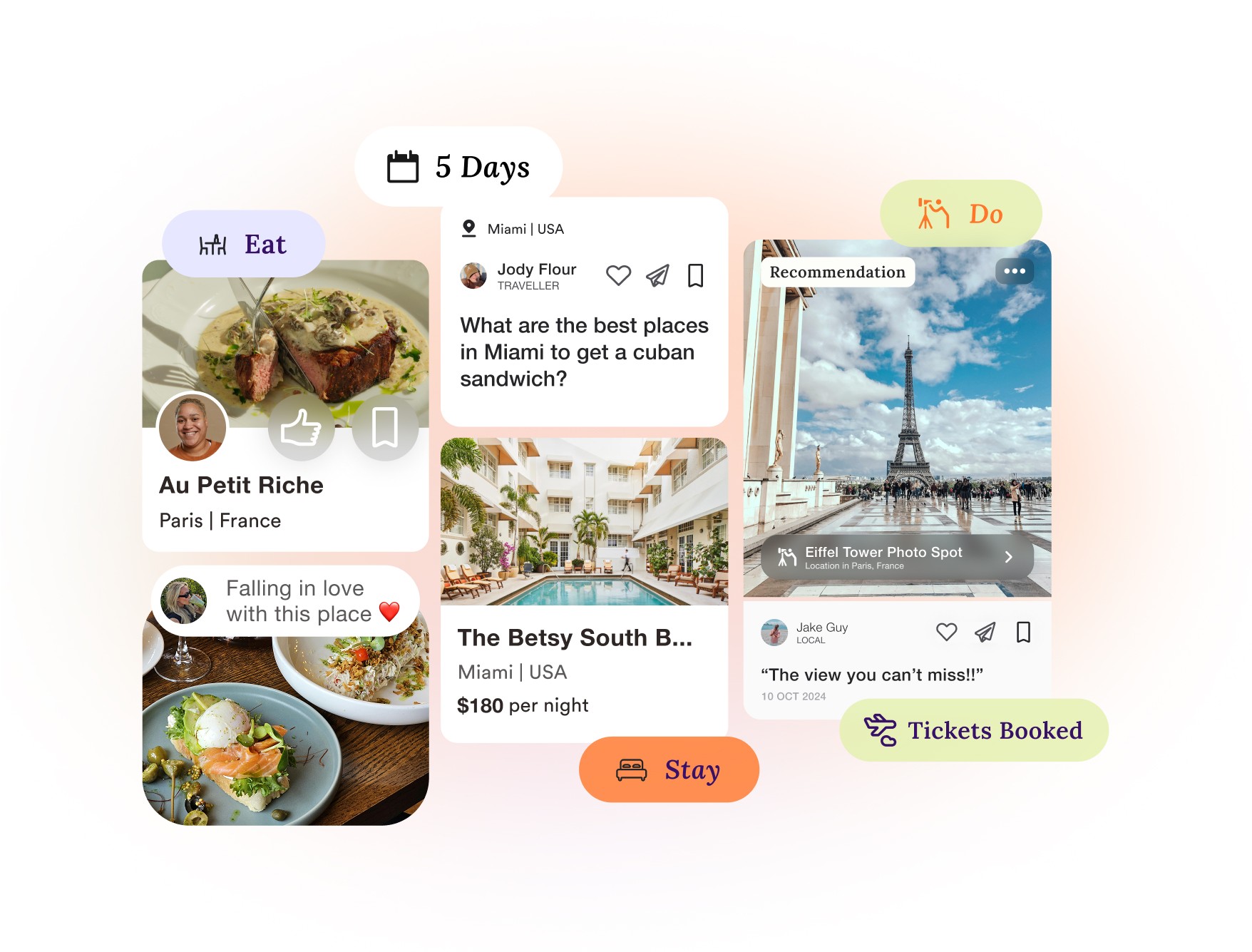
Maximizing content creation
In the early days of the platform we had few users and needed to solve for two things simultaneously: content quality and content quantity.
We addressed both with a single approach: lowering the friction to posting. A restaurant recommendation required no more effort than a social media post, while richer, structured trip write-ups were supported for those with more to share.
This created a natural content ecosystem. Locals posted about favorite spots and new finds in their city. Travelers used that pool of insider recommendations to plan their trips.
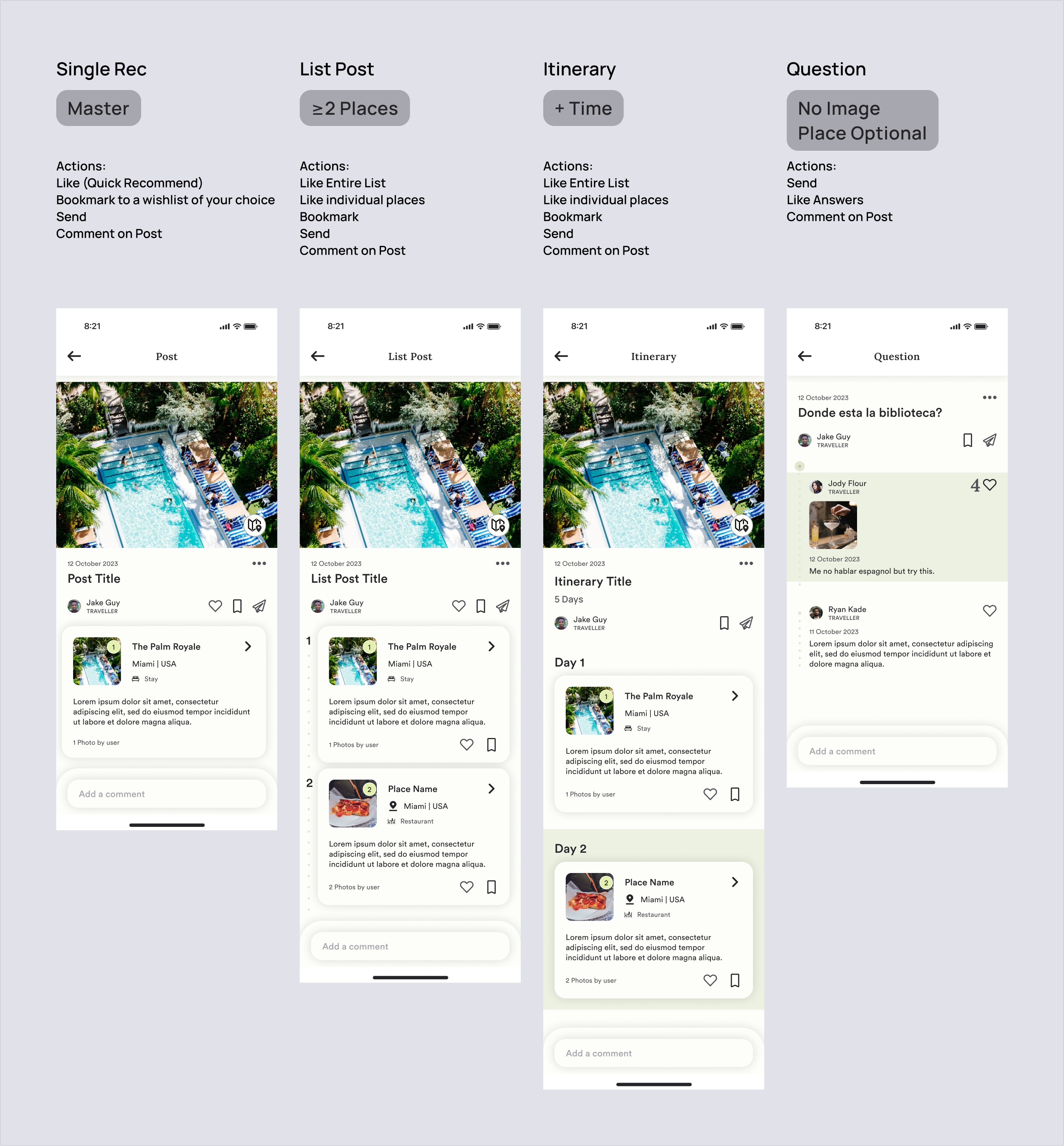
A Community Feedback Loop
Reddit-style questions gave users a reason to interact with locals directly, driving new recommendations without waiting for organic posts. The format lowered the bar further; answering a question felt lighter than publishing content unprompted.
As the platform grew, the forum features were phased out in favor of a creator-focused model, where travel creators could host and monetize their content directly on the platform.
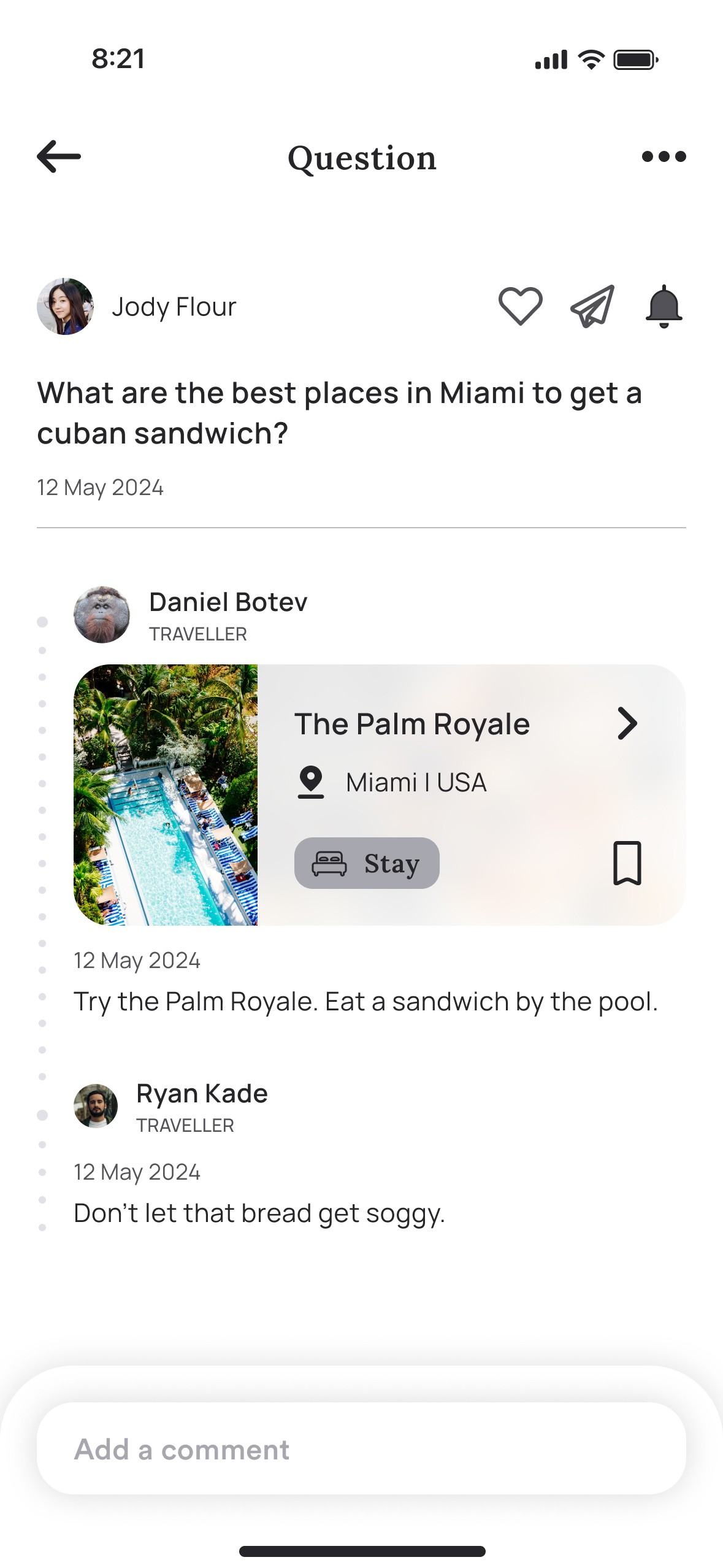
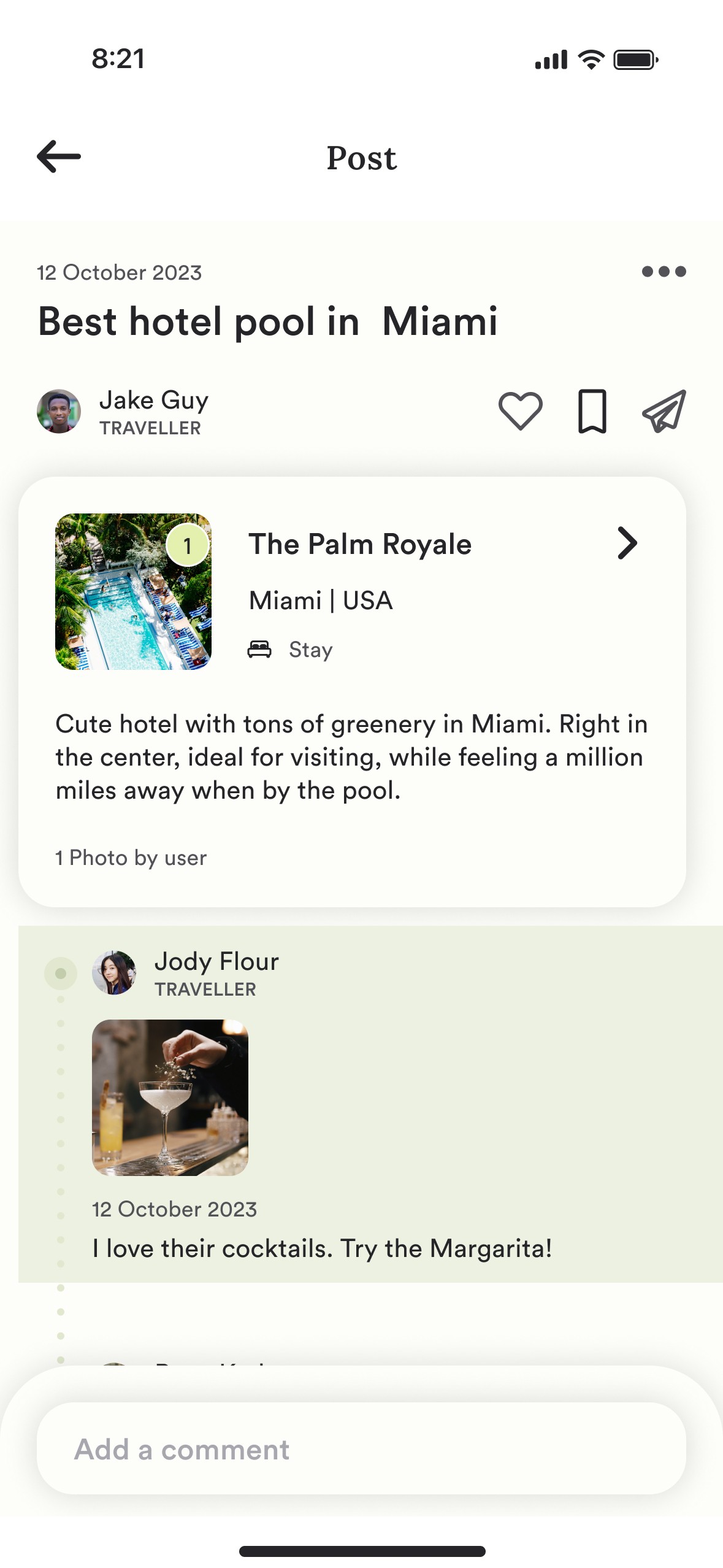
An enticing Look
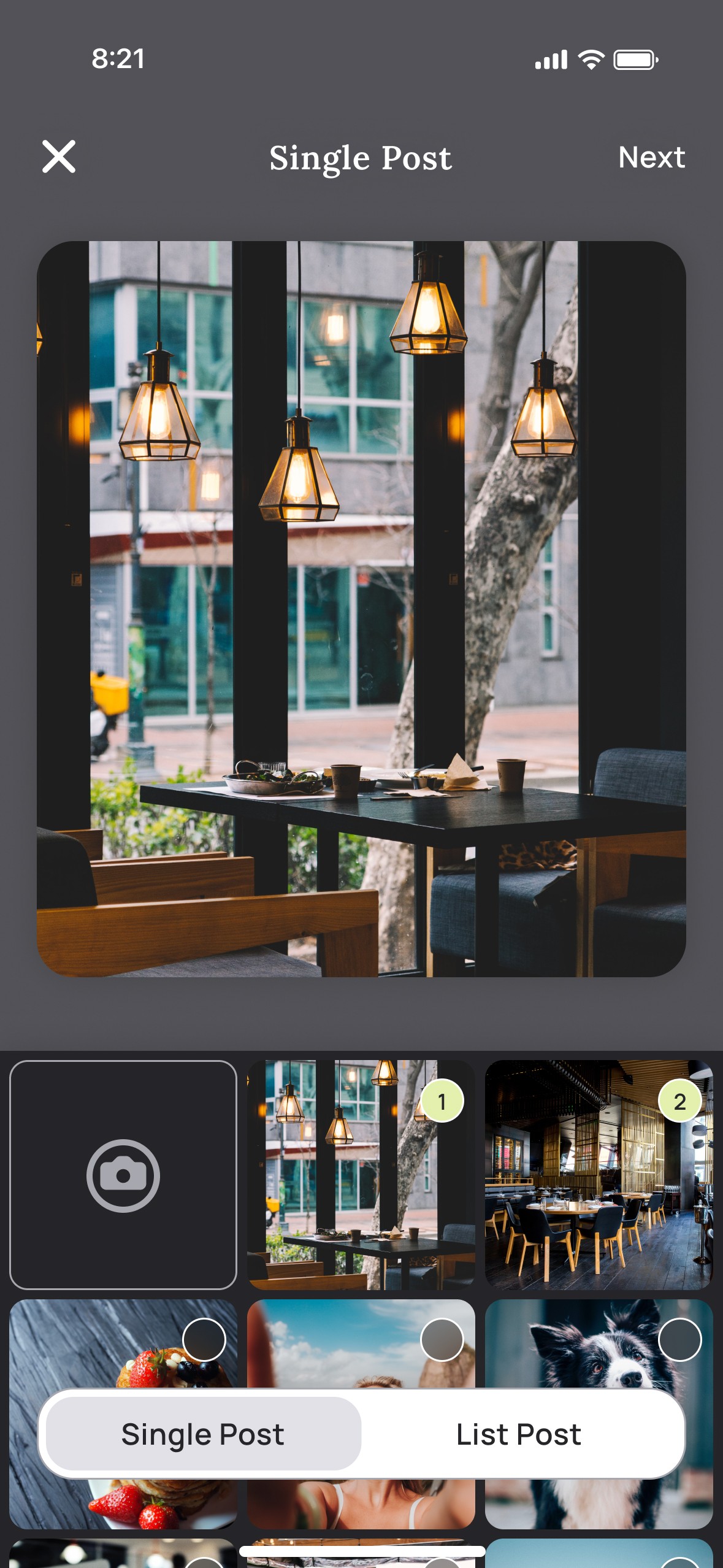
A great restaurant post with a bad photo won't convert a browser into a visitor. We optimized the posting flow to prioritize visuals, making it easy for contributors to lead with their best shot.
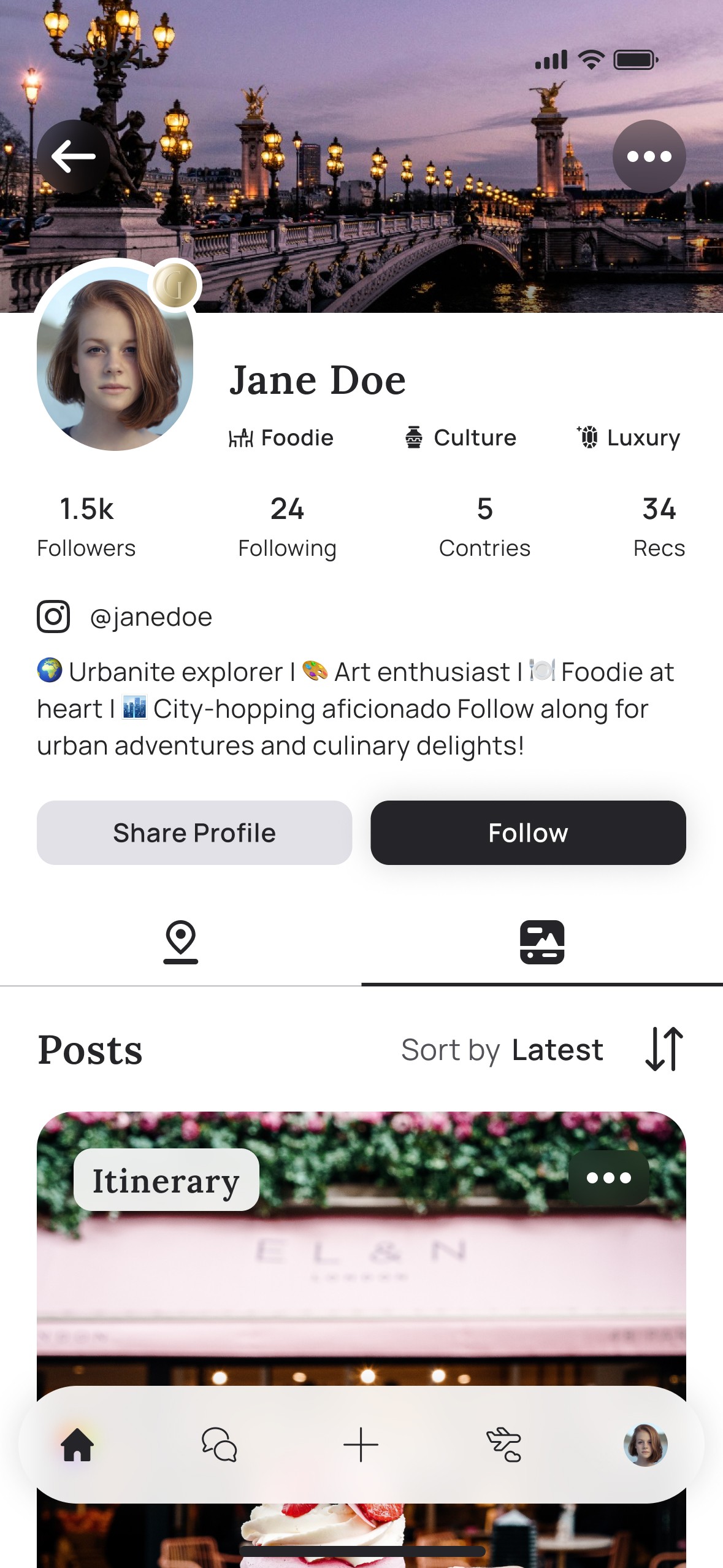
Early on we also committed to the creator economy angle, building out rich profile pages that creators could curate to showcase their recommendations and build a following. A compelling creator profile gives users a reason to follow, return, and trust, compounding the content flywheel over time.
Solving trip recommendations with AI
Scope And Constraints
The biggest problem in trip planning is finding the right things to add to your itinerary. Armed with community driven content, the next piece of the puzzle was serving this content to the right users and helping them to organize it into a trip. One of the challenges faced was not making the AI feature kill the community aspect of the platform.
My Contributions
App UI/UX
Tools: Figma
A curated feed
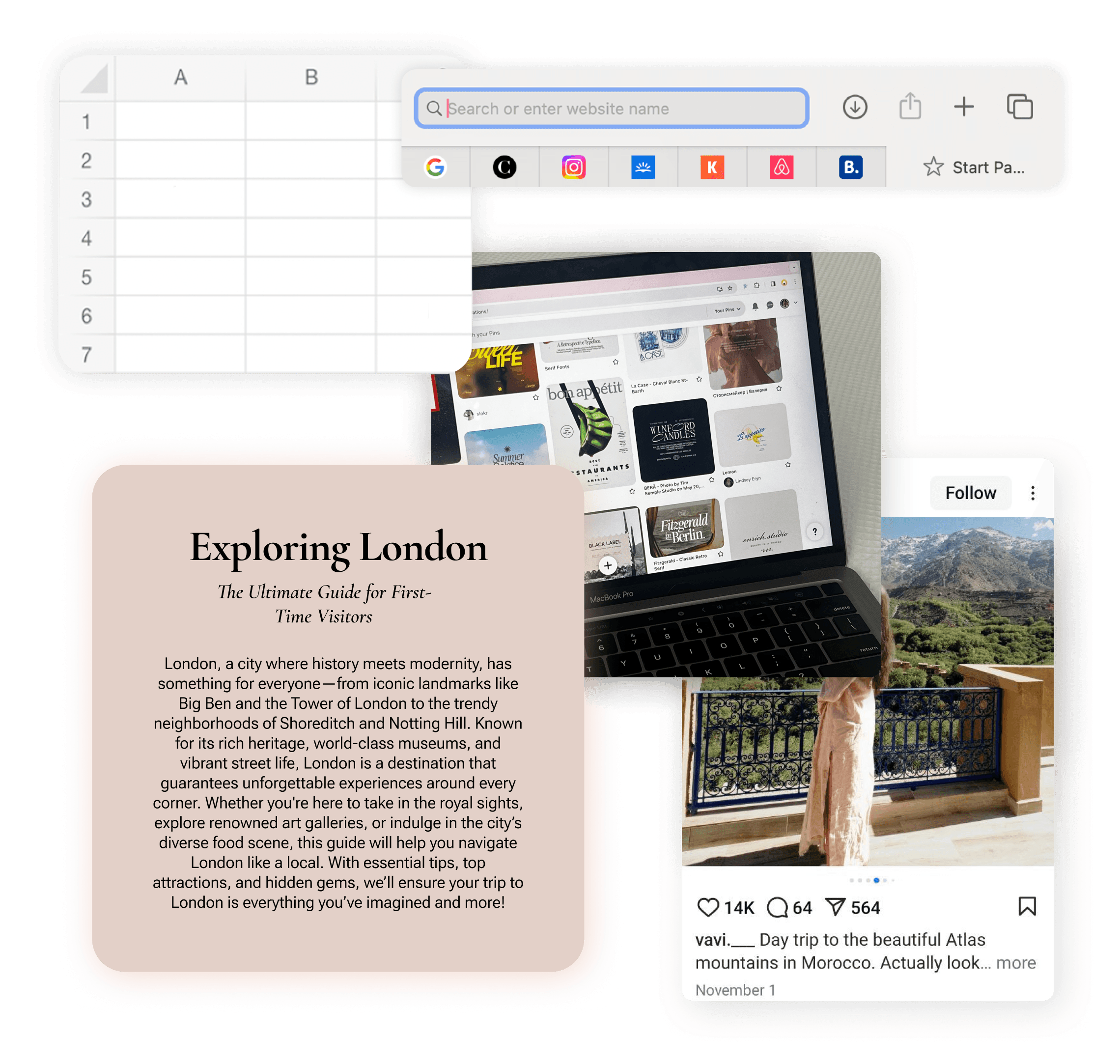
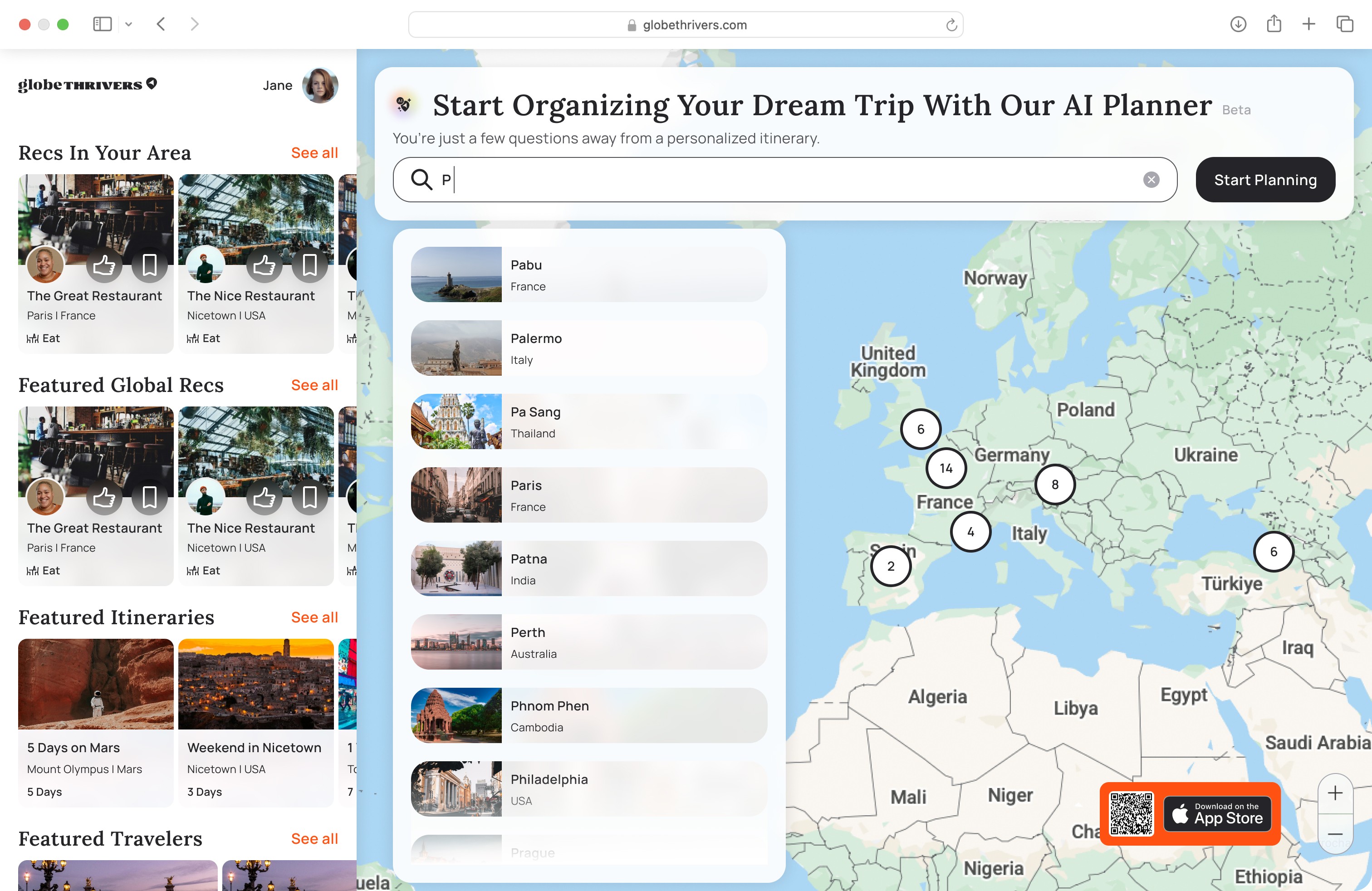
We started with an IG-style discovery feed, but found that surfacing the right content to the right user required more content than a cold-start platform could reliably provide, so we shifted to a structured home page that guided users toward specific tasks and search terms. This made for easier pick up by new users by working with the content we had rather than against it.
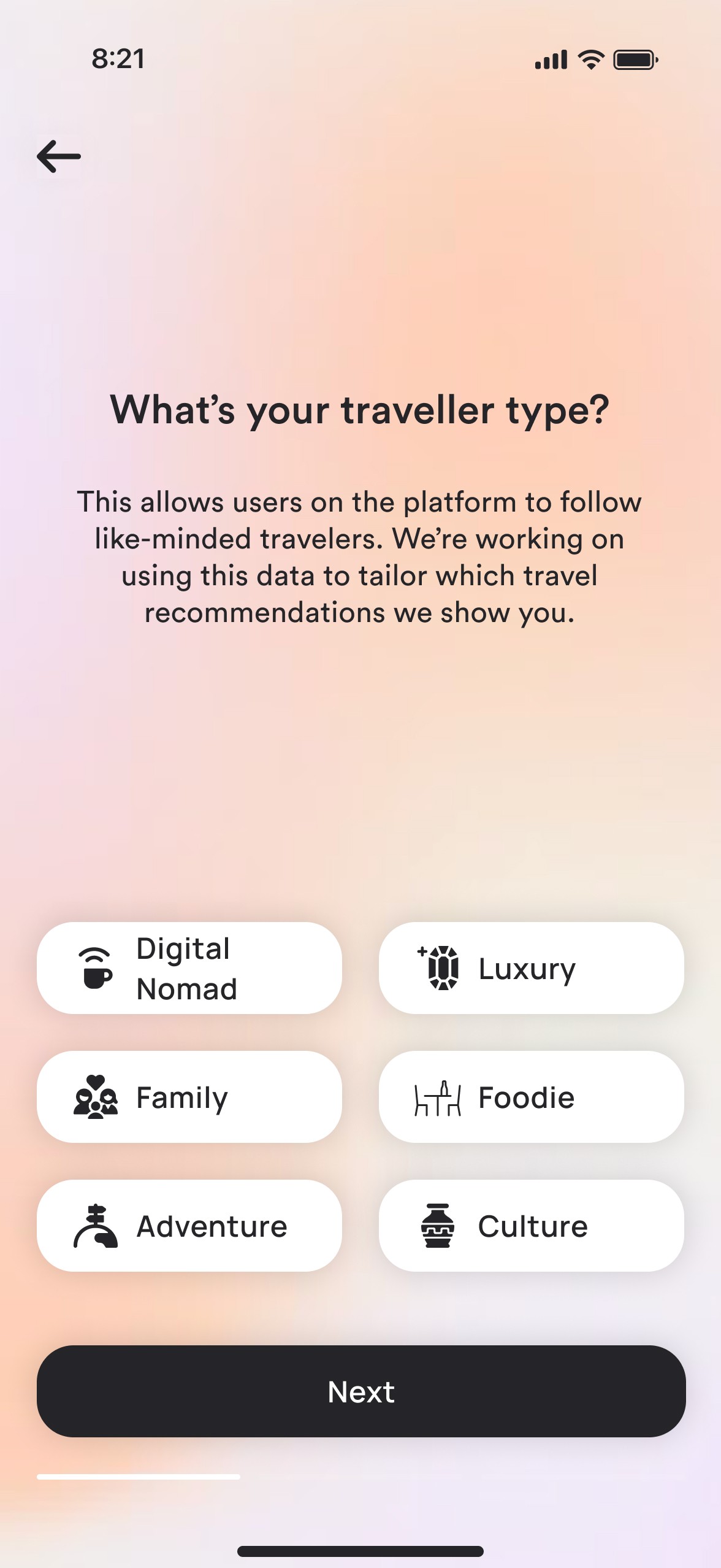
Onboarding collected travel style and budget preferences upfront, allowing the platform to tailor recommendations from the first session.
Planning without the hassle
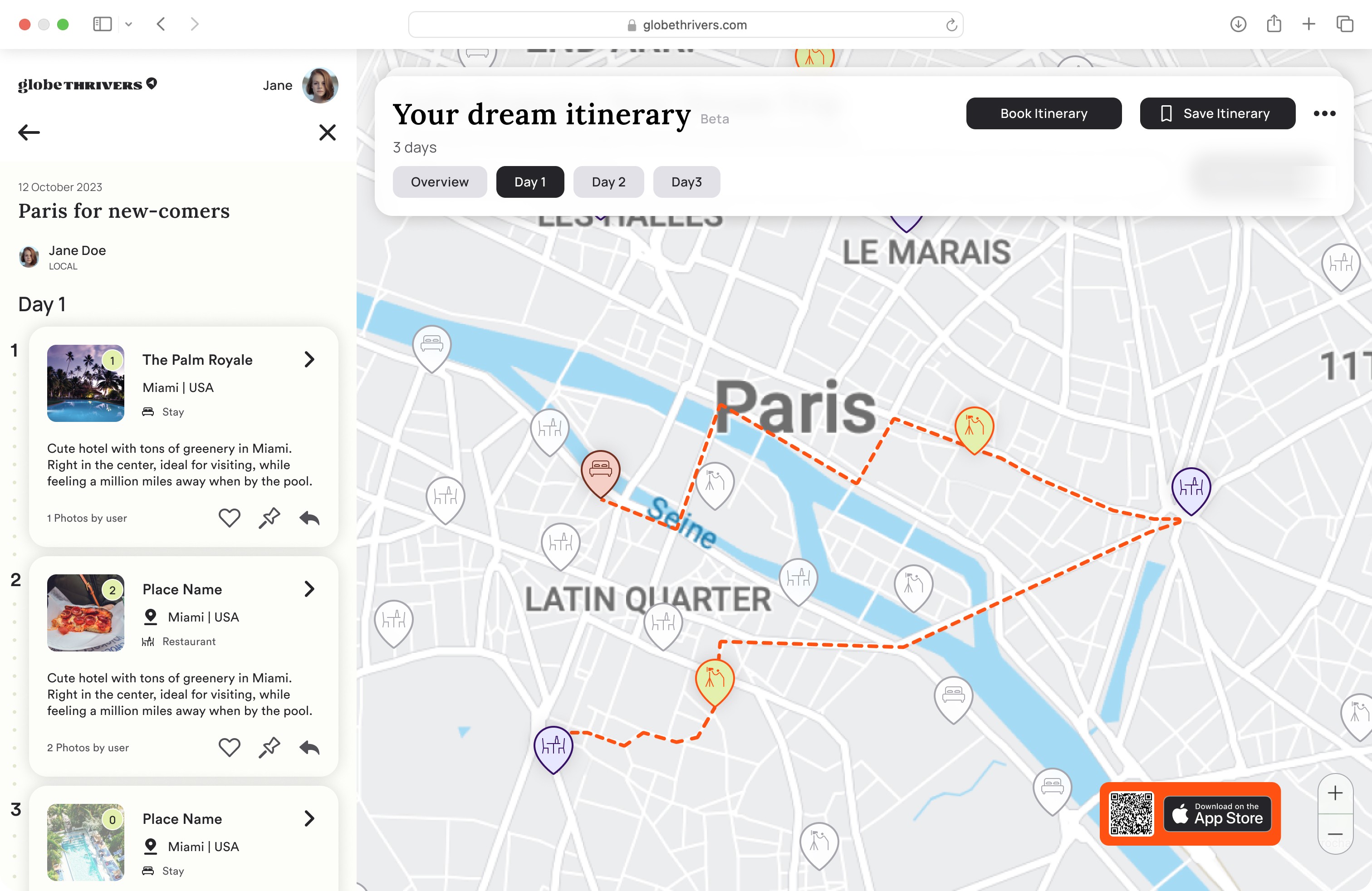
The core sell of the app is the one-stop-shop: save inspiration and organize it into a day-by-day itinerary. Planning a trip requires screen real estate, so a web-based version was released alongside the mobile app to give users the space the experience demanded.
Rather than reinvent established planning conventions, we benchmarked against apps like Wanderlog that had already solved rich itinerary UX.
Reaching New Customers
Scope And Constraints
With a limited marketing budget, the best strategy was to engineer virality rather than buy it. The challenge was that Globe Thrivers is a dense product — discovery, planning, booking, creators, advisors — and dense products are hard to sell in a scroll-stopping moment.
The goal was to find a single, snappy hook that communicated value instantly to someone who had never heard of the platform.
My Contributions
App UI/UX
Tools: Figma
Animations
Tools: Rive
Reducing the barrier to entry
Requiring a new user to download an app before seeing any value is a significant drop-off point. The web version eliminated that barrier; a link in a social post or ad could drop a potential user directly into a functional experience, letting the product sell itself before asking for any commitment.
It also solved a practical planning behavior: most people plan trips on a computer rather than a phone. The web version naturally supported this.
Optimizing for filmability
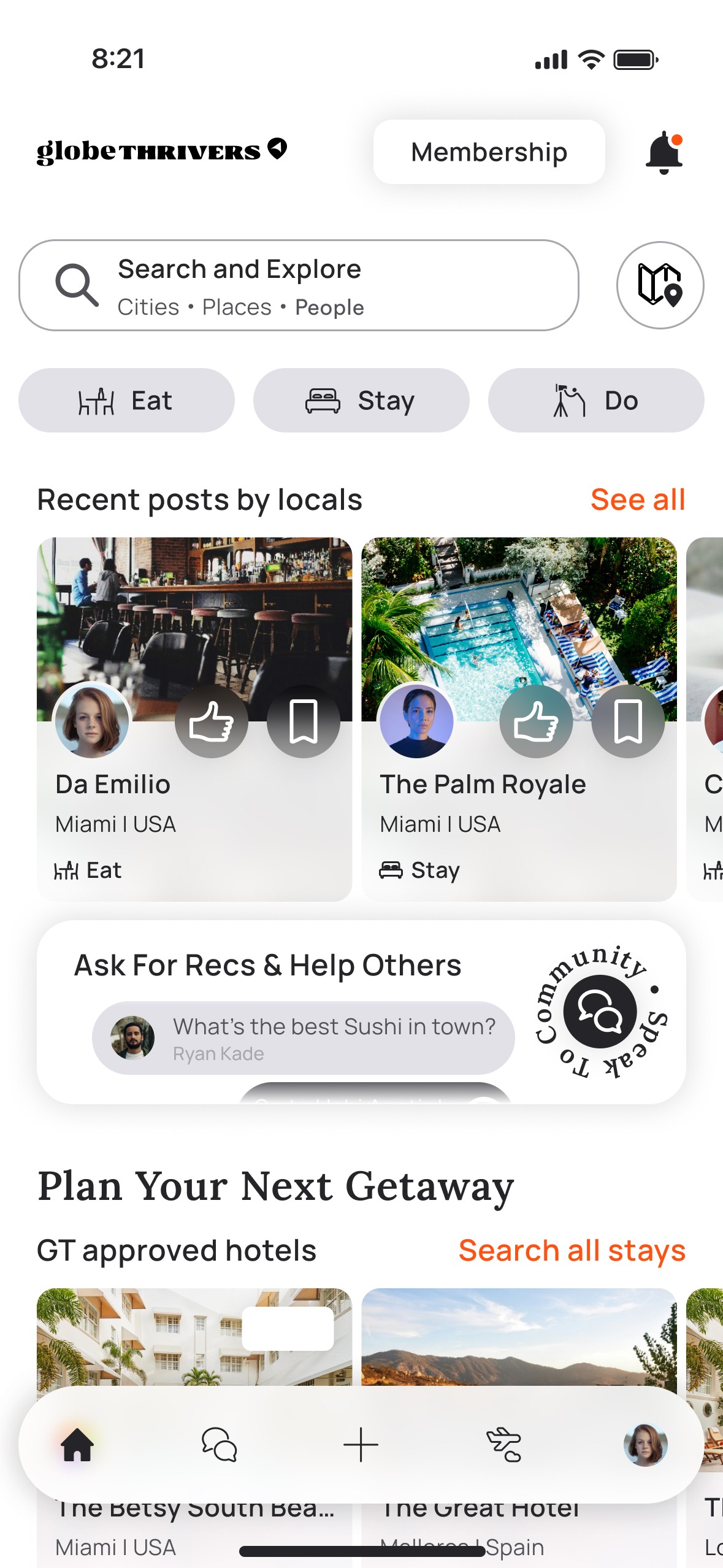
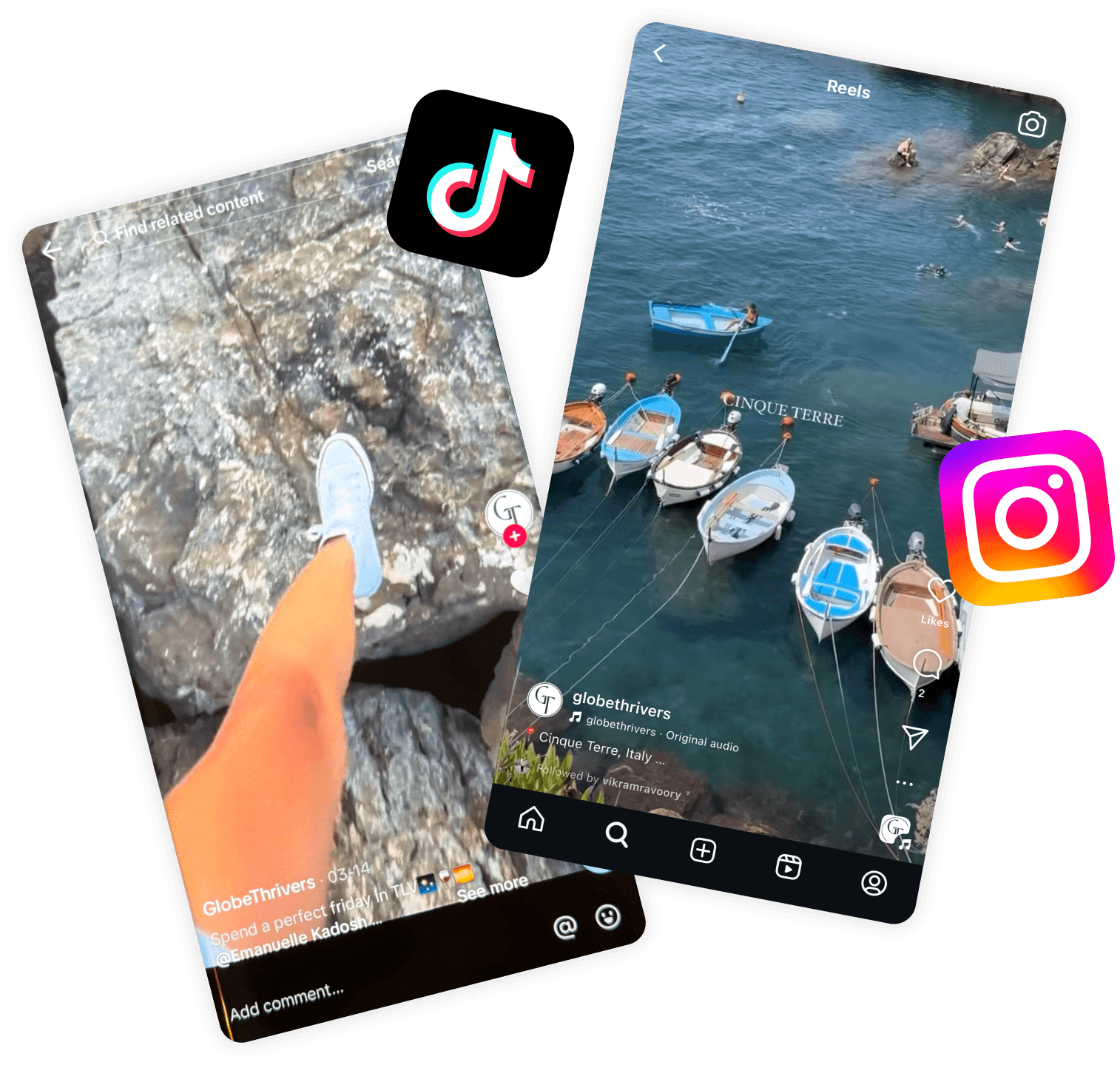
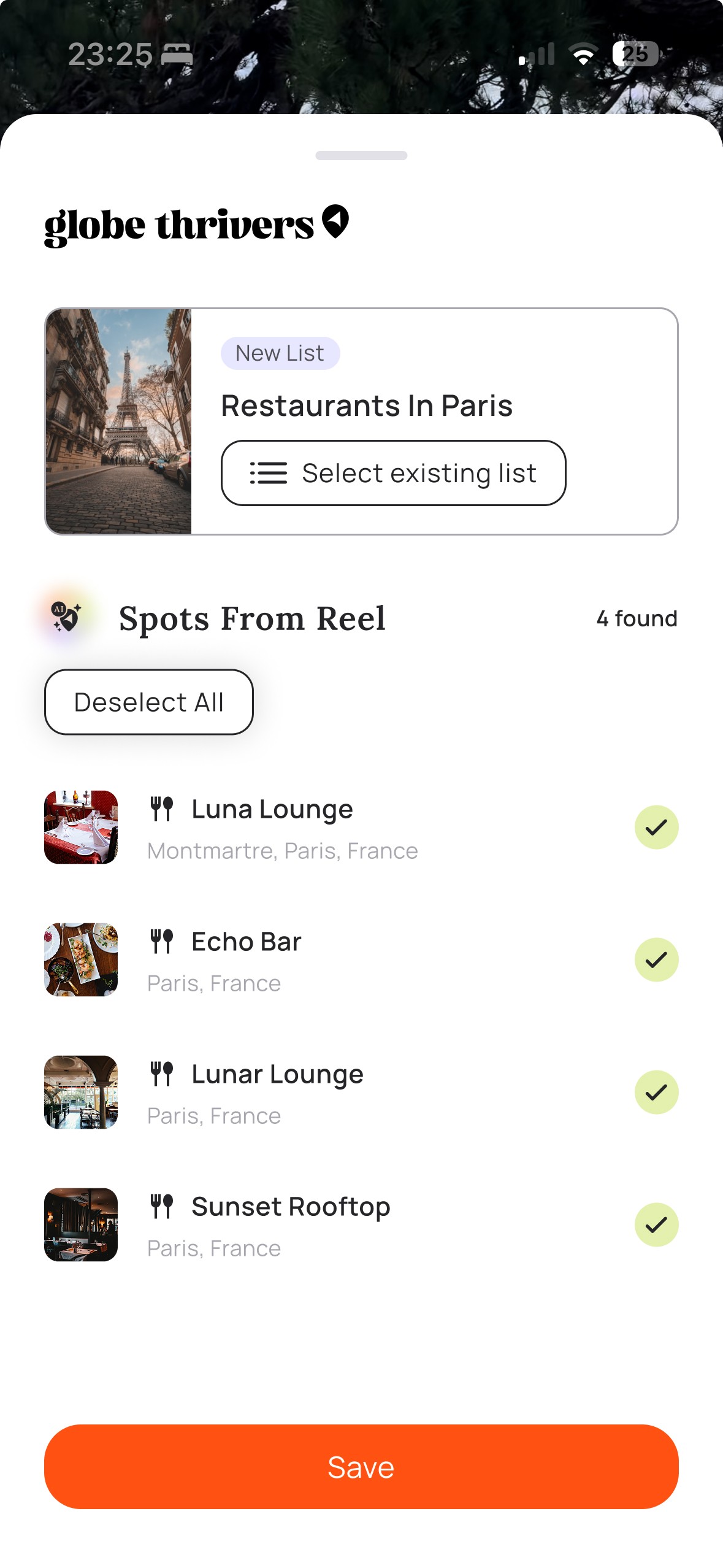
Inspired by a recipe-parsing app, we adapted the concept to travel: a feature that takes an Instagram or TikTok travel reel, identifies the places featured, and instantly generates a saved list, all without leaving the social media app.
Designing for filmability shaped every decision. Clear graphics, obvious state changes, and satisfying transitions made the flow visually legible on a screen recording. Minimal steps kept the perceived commitment low. The faster and more magical it felt, the more shareable it became.
Conclusion
Over two years we built a travel community from scratch, designing a content flywheel that grew a web forum of 200 beta testers into a platform of 1,500+ users and 1,000+ curated trips, then engineering a viral AI feature to carry that growth forward.